Top 10 Tips For Supporting And Informing PAT in Telford
In the UK electrical testing industry, the difference between a transactional test provider (a PAT tester) and a partner who is an effective health and safety partner is the continuous support. While the initial testing event addresses immediate compliance needs, the dynamic nature of workplaces–with constantly changing equipment, staff, and environments–requires continuous guidance to maintain safety standards between formal testing cycles. Electricity at Work Regulations 1988 require dutyholders who maintain electrical equipment to maintain it constantly. Therefore, accessing experts for advice between tests is essential in order to show diligence. A high level of continuous support can transform the PAT test into an annual test to a fully integrated safety management program. This is accomplished by updates on regulatory changes as well as risk assessments and practical help in solving problems. This relationship of advisory ensures that the safety of electric equipment is an ongoing function within the company and not just only a once-in-a-while compliance exercise.
1. Account Management Dedicated and One Point Contact
Professional PAT companies assign a designated account manager, who is the main technical and administrative contact for post-testing inquiries. This individual has a comprehensive knowledge of the history of the account including asset lists, account history, and risk profile, which means you don't need to provide your explanation every time. Account managers conduct periodic reviews, whether annually or biannually, to address issues, pinpoint emerging needs and discuss performance.
2. Telephone and Email Advisory Services for questions regarding technical issues in Telford
Customers should have access to technical support during testing cycles in situations like when evaluating the purchase of new equipment or for minor damage incidents. For technical issues, service providers must provide clearly-described channels for technical support (dedicated telephone line/email), with guaranteed response time (e.g. within two hours of business). This will allow duty holders to make informed decisions regarding safety in real-time. This prevents using potentially hazardous equipment as they wait until the next scheduled inspection.
3. Compliance Change Alerts and Updates to the Regulatory Framework in Telford
The regulatory framework is changed through HSE communications as well as amendments to the Code of Practice for IET. Court rulings also set new precedents. An extensive ongoing set of support includes a structured update service which informs clients about any pertinent modifications to their PAT system. This could include newsletters or announcements of important developments, or tailored advise explaining how specific change impacts their risk assessment.
4. Online Customer Portals and Digital Asset Management
Modern PAT companies provide online portals that provide 24/7 access to the whole testing ecosystem. The portal should contain: historic certificates that can be downloaded and the asset register that is updated in real-time, test records for equipment, photographs of equipment and details about future testing. Advanced portals permit users to make reports on new equipment, track minor incidents, or request assistance directly from the system, thereby creating a central digital platform for every aspect of electrical safety management and documentation.
5. User Training Resources and Toolbox Talks in Telford
The ongoing support is aimed at helping customers educate their employees. The providers should offer training materials, such as laminated guides for basic visual examinations, instructional videos presentations to facilitate induction training, and content to be used in "toolbox talks" which focus on electrical safety. Some providers provide virtual and onsite training sessions for designated duty holders, providing them to conduct basic user tests.
6. Risk Assessment Review and Adjustment Service
Initial risk assessments aren't static. Professional providers offer a review service triggered by operational changes: new equipment types, altered working environments, incidents/near-misses, or changes in user competence. The service entails reevaluating the frequency of testing and the methods used using the latest risks profile. Documentation is supplied to support any changes. This will ensure that the testing is efficient and justifiable.
7. Audits of HSE as well as Insurance Clients in Telford
Dutyholders need immediate assistance when facing audits by the HSE, major clients or insurance companies. A full, continuous assistance package provides all necessary documentation like certificates, calibration records and risk assessments that summarize the testing plan. In certain instances, a technical expert is able to attend audit meetings either in person or via video to explain and demonstrate the technical aspects.
8. Remedial Action Management and Repair Coordination in Telford
Support includes the administration of the entire process of remediation when faults have been identified. This assistance extends beyond the initial diagnosis to include providing estimates for repairs that require minimal disruption and coordinating repairs off-site through an certified workshops; and conducting thorough testing after completion and then changing all documentation to complete the loop. This turnkey approach ensures that any issues are not only found, but they are also remedied.
9. Management of equipment changes and updates to the register in Telford
Organisations acquire, dispose of, and relocate portable appliances constantly. Support for ongoing operations includes effective processes to update the master asset register between periodic testing. It could be as easy as supplying forms for asset registration or an upload portal option or include a service that changes the register based on the client's alerts. The compliance of a company is contingent on keeping an up-to-date, accurate register. This is because testing can only be conducted if there are all the assets that are listed.
10. Performance reporting and Continuous improvement analytics
Advanced companies provide quarterly or annually-based analysis reports that convert raw test information into actionable information. These reports analyze trends, like failure rates that are based on the type of equipment and its place of operation as well as the common fault PATterns and the costs of remedial measures and evaluate them against industry benchmarks. This analysis can help in constant improvement by identifying reasons for failures. Have a look at the recommended fixed electrical testing in Telford for site examples.

Top 10 Tips On The Compliance Of The Regulatory Compliance Of Fire Extinguisher Service in Telford
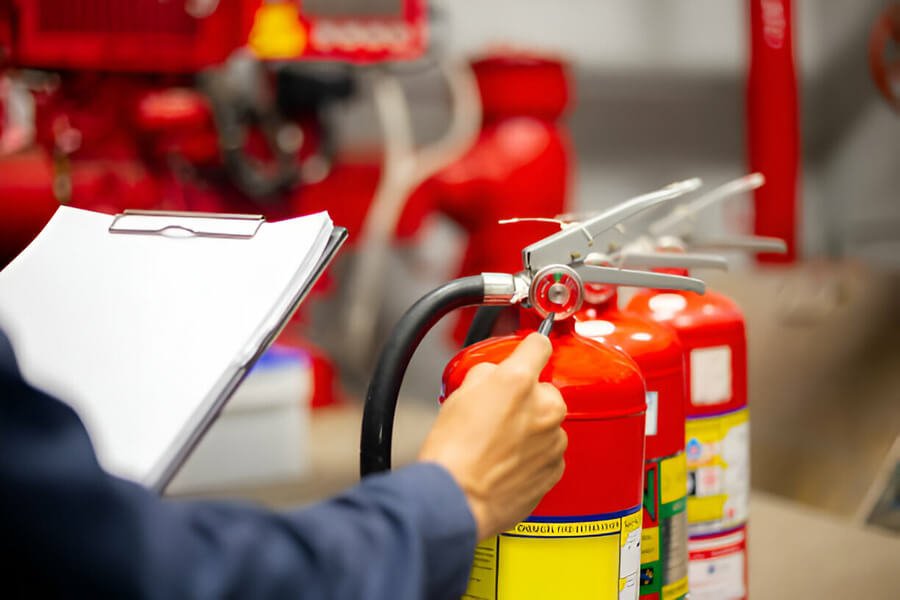
The framework of regulation that governs maintenance of fire extinguishers in the UK provides a comprehensive framework that is designed to guarantee the reliability of equipment and public safety through clearly specified legal obligations, technical standards, and certification programs. Fire extinguisher servicing is governed by the Regulatory reform (Fire Safety) Order, which provides specific legal specifications. This order is supported by technical standards and certification programmes from third parties that provide a structured PAThway for compliance. This multi-layered approach puts direct responsibility on the "Responsible Person" for each Telford to ensure appropriate maintenance as well as providing clear standards for demonstrating proper diligence. Knowing this framework will aid you in maintaining compliance with the law and make sure that your fire safety equipment functions properly in an emergency.
1. The Regulation Reform (Fire Safety) Order 2005 (FSO) in Telford
The Fire Scotland Act 2006 and Northern Ireland have similar regulations. The article 17 stipulates that "all fire-fighting apparatus should be subjected to a program of maintenance, and maintained in a state in which it is in optimum functioning condition and in good repair." The Order imposes this responsibility on the "Responsible Person" (typically the employer, owner or occupier of the premises) who is legally responsible for ensuring that appropriate maintenance regimes are in place and maintained for all equipment used to protect against fire, including portable extinguishers.
2. British Standard BS 5306-3 : 2017
This standard is a framework that outlines the requirements to maintain and operate portable fire extinguishers. It specifies different service types which include the basic type (annual inspection and tests that are simple) as well as extended service (5-year discharge test and an internal examination for water extinguishers as well as extinguishers with foam or powder) and overhaul (10-year pressure test and examination for CO2 extinguishers). To meet the requirements of law, the compliance with the BS 5306-3 requirements must be proved.
3. Third-Party Certification Schemes (BAFE SP101) in Telford
While it's not required, the most effective method of demonstrating the due diligence of a company is to use a SP101 BAFE (British Appropriations for Fire Equipment) certified provider. The UKAS-accredited certification scheme independently validates whether a business has met the strictest standards for technical expertise, quality of work as well as business processes and equipment. BAFE certifications are recognized by insurance companies and courts as a strong proof that the FSO's requirements have been met. They enhance the role of the Responsible Person.
4. Fire Risk Assessment – What's the function? in Telford
Fire Risk Assessment is a dynamic document that drives all fire safety and extinguisher decision-making. It is required to determine the appropriate firefighting apparatus in terms of size, Telford, and model, then define what maintenance is required. It is essential to check the FRA regularly, particularly if circumstances change. Any changes should be noted in the schedule of service. These reviews are often aided by reports from the servicing providers.
5. Documentation and proof requirements in Telford
It is crucial to provide detailed documentation to demonstrate compliance. A detailed report must be issued by the service company after each service. It should contain details of the company's name, contact information, engineer details as well as the date of service and the type of items that were maintained, any recommendations or any faults discovered. These documents must always be accessible to the authority in charge of enforcement (Fire and Rescue Services) and insurance companies. In the absence of documents, even if the service has been performed, enforcement action can be taken.
6. Penalties, Enforcement Mechanisms and Other Methods of Enforcement, Penalties and Other in Telford
Local Fire and Rescue Authorities have vast enforcement powers and conduct audits to ensure compliance. In cases of non-compliance to servicing requirements, local Fire and Rescue Authorities may issue Amendment Notices that require specific improvements in a given period of time Enforcement Notices that require specific changes, or, in the event that the situation is serious, Prohibition Warnings which immediately stop or block the Telford. In the case of serious violations of the law, which includes those that pose a threat to life, the court may impose unlimited punishments.
7. Insurance and its implications in Telford
Most commercial insurance policies have a requirement for compliance with fire safety legislation as a policy condition. Service records that are not up to date or non-compliant providers can invalidate insurance coverage in the event of a fire incident. Insurance assessors ask for servicing records when processing claims. Insurance companies may also require specific certification standards, like BAFE Sp101, which is an obligation for coverage, especially in high-risk commercial premises and policies.
8. Technical Competencies in Telford
The FSO stipulates that maintenance must be performed by an "competent person." While not legally defined, competence generally includes: formal training on BS 5306-3, manufacturer-specific equipment training, practical experience, and understanding of relevant regulations. Through periodic audits and evaluations of their accredited providers, third-party certification schemes such as BAFE SP101 can provide the most exact proof of the competence of technicians.
9. Environmental Compliance (Duty Of Care) in Telford
Environmental legislation governs the proper disposal of extinguishers which were decommissioned as well as other garbage. This includes, in particular, the Environmental Protection Act (1990). Registered waste carriers must offer Waste Transfer Notes. Responsible Persons should ensure that their service provider complies with the law when it comes to disposing of their waste.
10. The frequency and scope of service requirements in Telford
Compliance requires adherence to the frequency of service required by BS 536-3: basic maintenance every year for all extinguishers extended service every five years for foam, water, and powder types, and an overhaul every 10 years for CO2 units. In addition, it is the responsible person's responsibility to ensure that every month, visual inspections take place (often done by staff). These inspections are to look for obvious problems, like damage, obstruction, and loss of pressure. This mix of professional services and user inspections makes the basis for a maintenance plan. Read the most popular fire safety in Telford for more tips.